PTSD or cPTSD
The difference between PTSD and complex PTSD — duration and diagnosis — and why both are equally worthy of attention.
Quick answer
PTSD is generally linked to a single, identifiable event or short-term trauma and is an official DSM-5 diagnosis, while complex PTSD (CPTSD) stems from trauma that occurs repeatedly over a longer period, such as months or years, and is not currently an official DSM-5 diagnosis. Both are valid and worthy of attention and treatment, according to Meredith Shuman. The distinction is mainly about duration and the nature of the traumatic experience rather than one being more serious than the other.
Key takeaways
- PTSD is typically tied to a one-time or short-term event that can usually be pinpointed on a calendar, and it is an official diagnosis in the DSM-5.
- Complex PTSD (CPTSD) involves trauma that unfolds over a longer period, often months or years, and is not currently an official DSM-5 diagnosis, though it is a widely used term.
- James Trail and Trauma Talk do not place more value on PTSD over CPTSD or vice versa; both are worthy of attention and treatment.
- Childhood experiences, such as growing up with an untreated parental mental health diagnosis, can create lasting themes like rejection that carry into adulthood.
- Taking an 'emotional pulse' before reacting can help someone check whether they are responding to an old belief or lie rather than the present situation, supporting regulation and reframing.
New answers in your inbox
Short, practical, trauma-informed answers, sent whenever we publish.
Common questions
What is the difference between PTSD and complex PTSD (CPTSD)?
Is complex PTSD an official diagnosis?
How can you tell if you're reacting to an old wound versus the present situation?
Full transcript
Read the full transcriptHide transcript
Introduction
Let’s talk today about the difference between PTSD and CPTSD. If you stay to the end, I’m going to share a personal story about some of my own challenges in this arena.
PTSD vs. Complex PTSD
PTSD, post-traumatic stress disorder, is pretty common. A lot of us have heard of this. It is an official diagnosis in the DSM-5, which is a diagnostic manual that helps to determine whether or not insurance companies pay for treatment. PTSD is typically about a one-time event or short-term event or events. You can usually point to it on the calendar — it’s pretty contained.
CPTSD is complex — not childhood, it’s called complex PTSD, complex post-traumatic stress disorder. It is more of a phrase that people use. It’s not an official diagnosis in the DSM-5 as of now, and it is much more long-lasting. This is trauma or traumatic events that have happened over a longer period of time, like over months or years, and many times it includes childhood trauma that either continued into adulthood or that activated things into adulthood. It can also have nothing to do with childhood trauma, but have started and continued through and into adulthood.
So you just get the impression that complex PTSD is a much longer thing. Here at James Trail and in Trauma Talk, we don’t value one thing over another. PTSD and CPTSD — both stories have value, both are worthy of our attention and of treatment. I hope that is the briefest examination of it. We’re going to provide some links in the description to give you some more information if you want to dig in a little deeper.
A Personal Story
One personal story that I could offer is that I grew up with a mother who for certain had some sort of severe mental health diagnosis that was never treated and was never diagnosed. She was never really treated for it, and so that had a massive impact — just her mental health, or lack thereof, had a massive impact on me as a child. A running theme that I can easily recall is the theme of rejection. I just never felt like she approved of me or that I was enough. And it’s continued all the way into adulthood.
I can even think of a story off the top of my head. I’m married and I have five kids, and a long time ago, when they were still young, we thought it would be a really fun gift for my dad — my parents are married — to go down to another state, where we all went to college, and go to a football game together. I wasn’t sure if it was something my mother could do because of her physical challenges as well as her emotional challenges, but I knew that for everyone who could go, it would be a really fun memory for all of us to go to a football game at the college we all graduated from. This would not be a small task for me and for our family — this is packing up five kids, hotels, gas, long car rides, and all that kind of stuff. But I wanted to do it for my dad’s birthday because I thought it would be a really fun memory.
So what happened was, when I went to my parents’ house and said, “Hey Dad, there’s this gift I want to give you for your birthday,” she got really mad and really hurt because she questioned my motive. She thought I had picked this intentionally, knowing she wasn’t going to be able to physically do it, and that I had chosen that activity intentionally to hurt her.
Reframing and Regulation
How that shows up in life today is that when people severely question my motives when I’m really trying to do something good, when I’m really trying to bring something positive and they question me in such a way to say, “Well, you’re just doing that because of some selfish reason,” and they name it or whatever — I’m sensitive to that kind of thing. I’m also pretty sensitive to rejection in relationships because I do really feel like she rejected me growing up.
Now, I was never officially diagnosed with PTSD, or informally diagnosed with CPTSD. I’m not sure that this qualifies for that, and I’m not trying to diagnose myself because that’s not a great idea. But I just wanted to share that there are hard things that happen in childhood, and sometimes they follow us into adulthood.
So one of the things I’m always trying to do is, whenever I am upset or hurt by something that someone says, I want to take an emotional pulse. Stop for a minute, take my emotional pulse, and think: is this an old lie that I’m believing in my head, that this person is actually rejecting me, or is it just putting salt in a wound of rejection when really that’s not what this is? And I just need to regulate my system, reframe, and back up a minute.
I don’t do this perfectly for sure, and I’m still, as we say, on the trail. I still have a lot to learn.
Closing Thoughts
That’s just a little personal story to give you some context. I hope this has been helpful, and we definitely want to hear your thoughts in the comment section. One thing we love to say here with James Trail and at Trauma Talk is that on this journey, trauma doesn’t get the last word, because we’re doing this together.
Watch next
All episodes
Do I Have Childhood Trauma? And What Can I Do About It Now? | Part 2
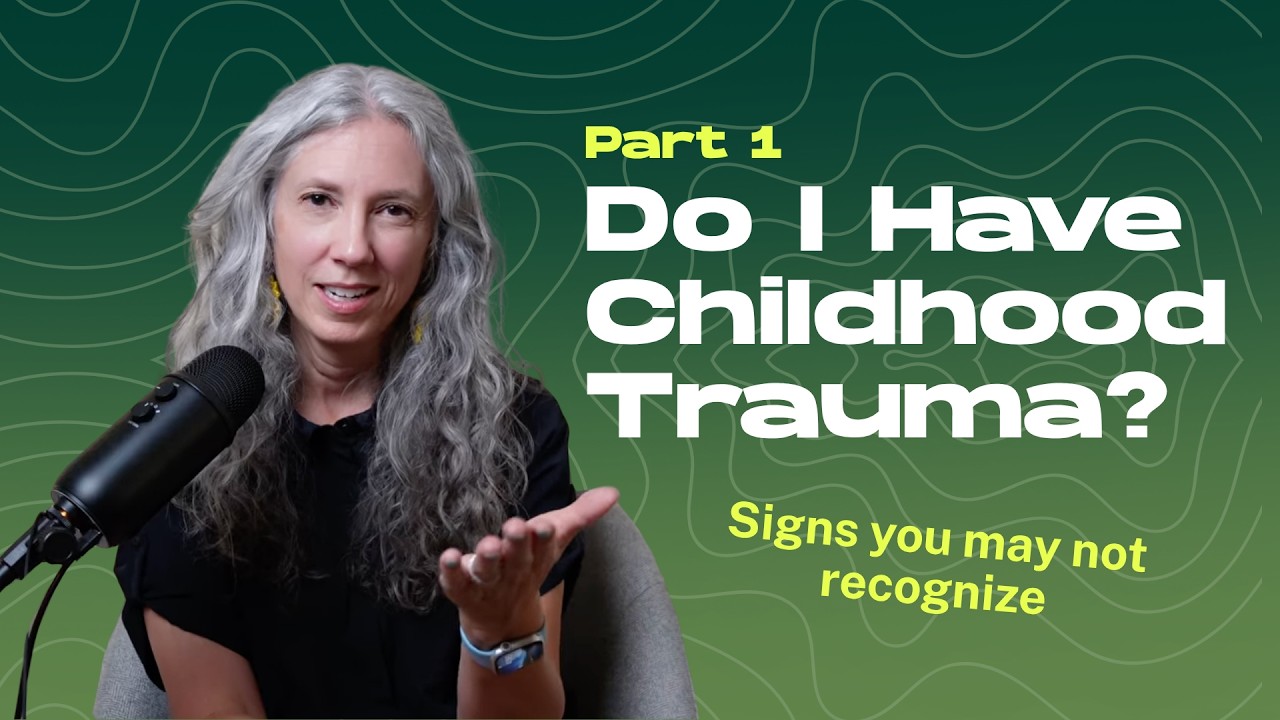
Do I Have Childhood Trauma? | Part 1

What Is Trauma? Understanding Trauma, Mental Health & When to Ask for Help

Can I Actually Heal From Childhood Trauma?

What is the Difference Between Burnout & Depression?

Why Is My Child So Anxious or Depressed?
Keep exploring
Get new answers in your inbox
Short, practical, trauma-informed answers — a new one whenever we publish.
Bringing this to your team?
Start at the Trailhead — a few honest minutes to see where your organization stands.
Start the Trail Marker →